Demonstrative Pronouns: Definition, Examples, Uses, Rules
 Jasdeep Singh23 Nov, 2025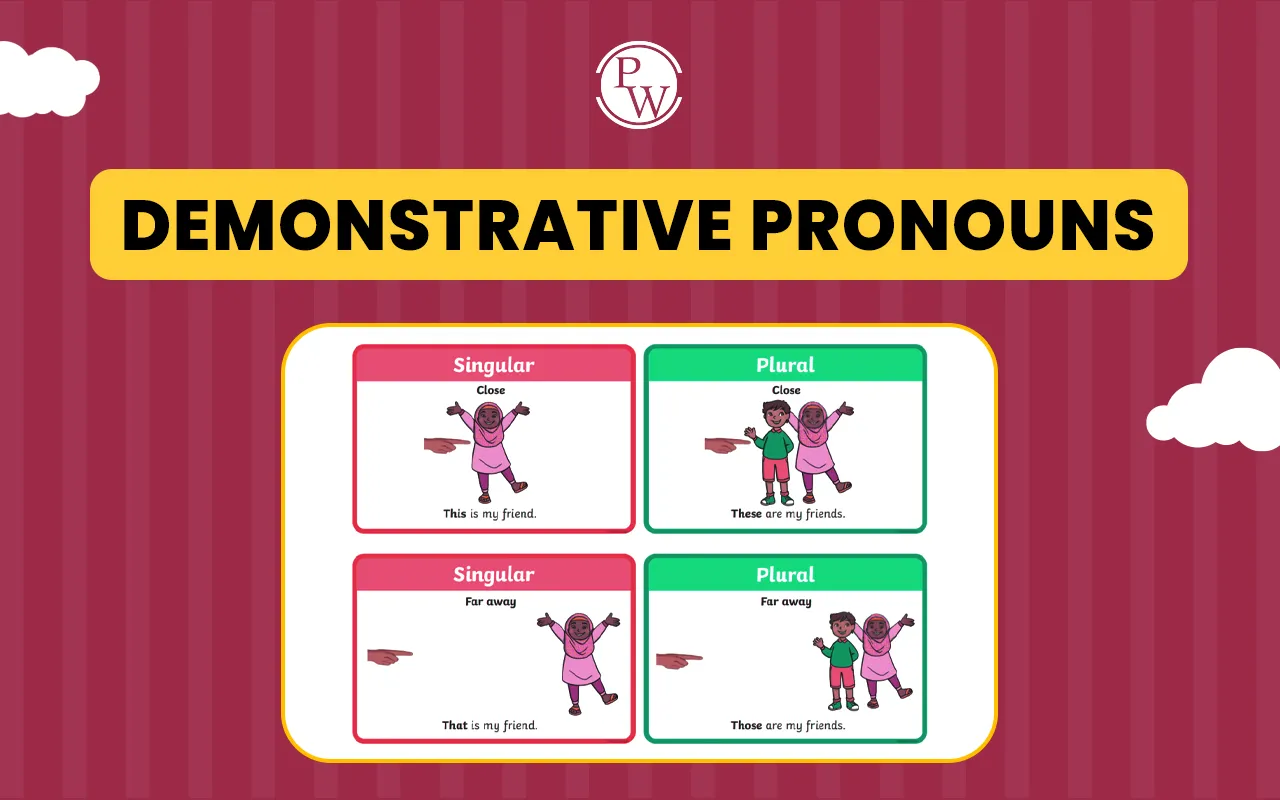
What is Demonstrative Pronoun?
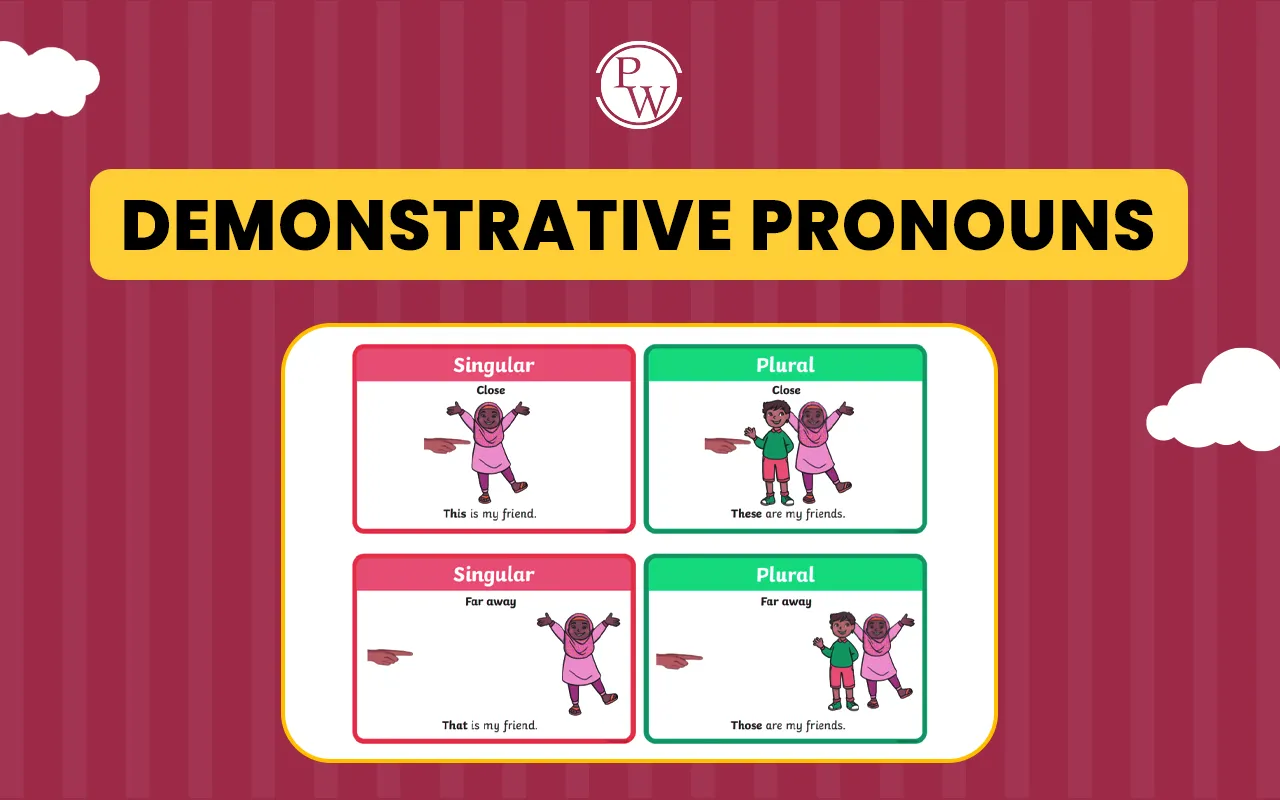
Demonstrative Pronoun Definition - A demonstrative pronoun is a pronoun that points to specific people or things and shows whether they are near or far from the speaker. They stand in place of nouns, helping to avoid repetition. In simpler terms, demonstrative pronouns are used to "demonstrate" or "point out" something specific.
The four main demonstrative pronouns in English are:
-
This (singular, near)
-
That (singular, far)
-
These (plural, near)
-
Those (plural, far)
How to Use Demonstrative Pronouns?
When using demonstrative pronouns, it’s important to match the pronoun to the number (singular or plural) and the distance (near or far) of the object being referred to. Here’s an easy way to remember: This and These are used for items that are close to the speaker.
Example for singular : “ This is my favorite book.” Example for plural : “ These are my favorite stories.” That and those are used for items that are farther from the speaker.
Example for singular: “ That is a beautiful painting.” Example for plural: “ Those are the mountains we visited last year.
Demonstrative Pronouns Examples
Let’s practice with a few examples to see how well you understand demonstrative pronouns:
- This : “ This is the best drawing I’ve ever made.”
- That : “Do you see that cloud shaped like a dragon?”
- These : “ These are the apples we picked from the orchard.”
- Those : “ Those were the days when we played outside until sunset.”
Now, try to fill in the blanks with the appropriate demonstrative pronoun:
- “___ is my favourite song playing on the radio.”
- “I can’t believe ___ is the house we grew up in.”
- “___ are the flowers we planted last spring.”
- “Do you see ___ birds sitting on the fence?”
Answers :
- This
- That
- These
- Those
Demonstrative Pronouns vs. Demonstrative Adjectives
A common source of confusion is the difference between demonstrative pronouns and demonstrative adjectives. While both use the words this , that , these , and those , they function differently in sentences.
Demonstrative Pronoun : Replaces a noun in the sentence. It stands alone without the noun it refers to.
Example: “ These are amazing!” (Here, “these” acts as a pronoun that replaces the name of the object being talked about.)
Demonstrative Adjective : Describes and comes before a noun, adding more information about it.
Example: “ These apples are sweet.” (Here, “these” modifies the noun “apples” and acts as an adjective.)
Key Point : When a demonstrative word is followed by a noun, it functions as an adjective. When it stands alone and refers to a noun that is implied, it acts as a pronoun.
Common Mistakes with Demonstrative Pronouns
Misuse of "This" and "That" : Sometimes, people use this for something far away, which can be confusing. Always remember that this refers to something near and that refers to something far away.
- Incorrect: I love this chair over there. (If the chair is far, "that" should be used.)
- Correct: I love that chair over there.
Confusion between singular and plural : Using this with plural nouns or those with singular nouns can be misleading.
- Incorrect: This are my keys.
- Correct: These are my keys.
Demonstrative Pronouns Uses
Did you know demonstrative pronouns like this, that, these, and those don’t just work for objects? They can also be used to point out ideas or events!
For example, when you say, “This is why I love weekends,” “this” refers to the idea of enjoying weekends. Similarly, in “That was an amazing concert!” , “that” points to the event itself. These words make it easy to talk about things without repeating their names, making your sentences clearer and more engaging.
Demonstrative Pronouns in Sentences
Demonstrative pronouns can enhance storytelling by making pointing out specific items or details easier. Imagine you’re at a park with your friends, enjoying a picnic. You hold up a container and say, “These are the cookies I made myself,” referring to the cookies in your hands.
Then, pointing to the picnic basket a bit farther away, you add, “Those are the sandwiches my mom packed.” By using “these” and “those,” you can clearly show which snacks you’re talking about without repeating their names.
Demonstrative pronouns are simple, yet powerful tools in language that help us make our speech and writing clear and direct. Whether you’re telling a story, describing your favorite things, or pointing out something in the distance, this , that , these , and those can help you express yourself with ease. Join English Learning Online Classes for Kids Now!!
| Related Links | |
| Pronouns | Antonyms |
| Singular nouns | Synonyms |
| Plural nouns | Conjunctions |
Demonstrative Pronouns FAQs
What is a demonstrative pronoun?
What are some demonstrative pronoun examples?
How are demonstrative pronouns different from adjectives?
When should I use this vs that?
Why are demonstrative pronouns important in English?