Gerunds: Meaning, How to Use, and Examples
 Jasdeep Singh25 Apr, 2025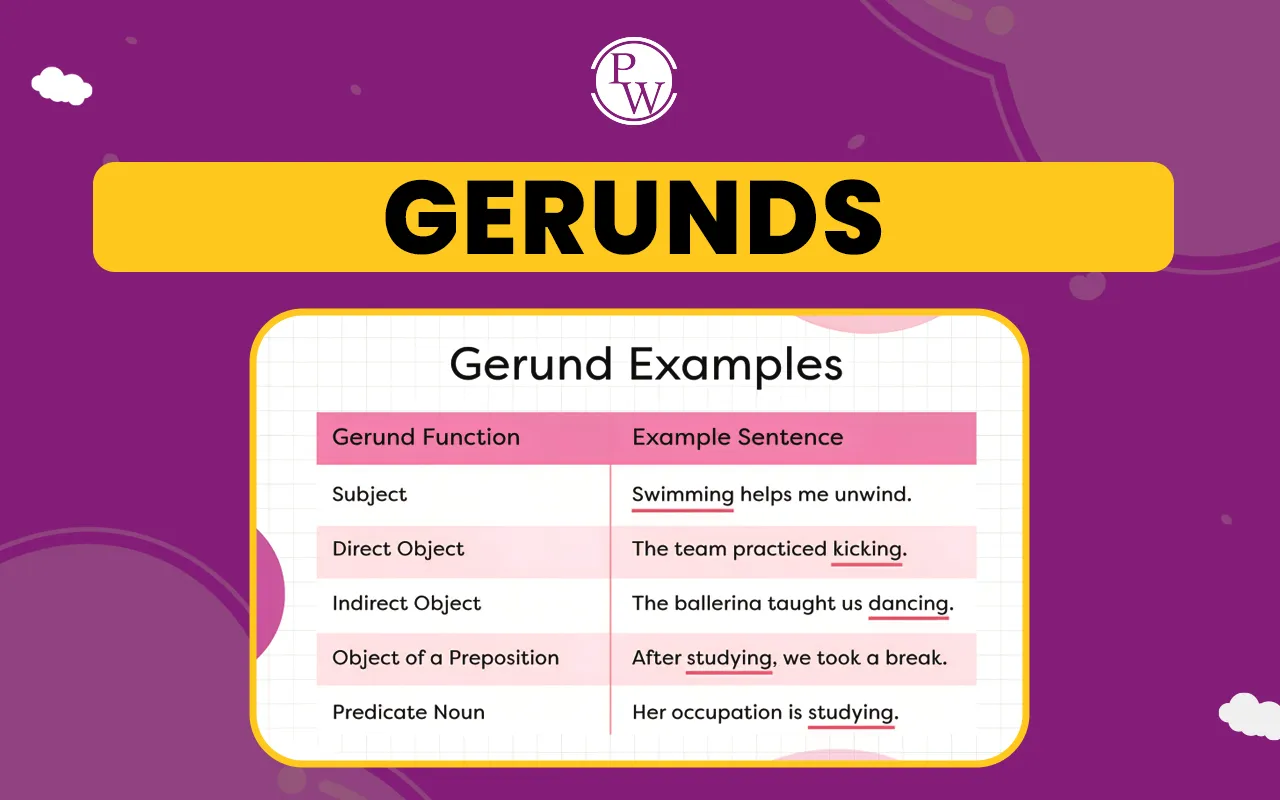
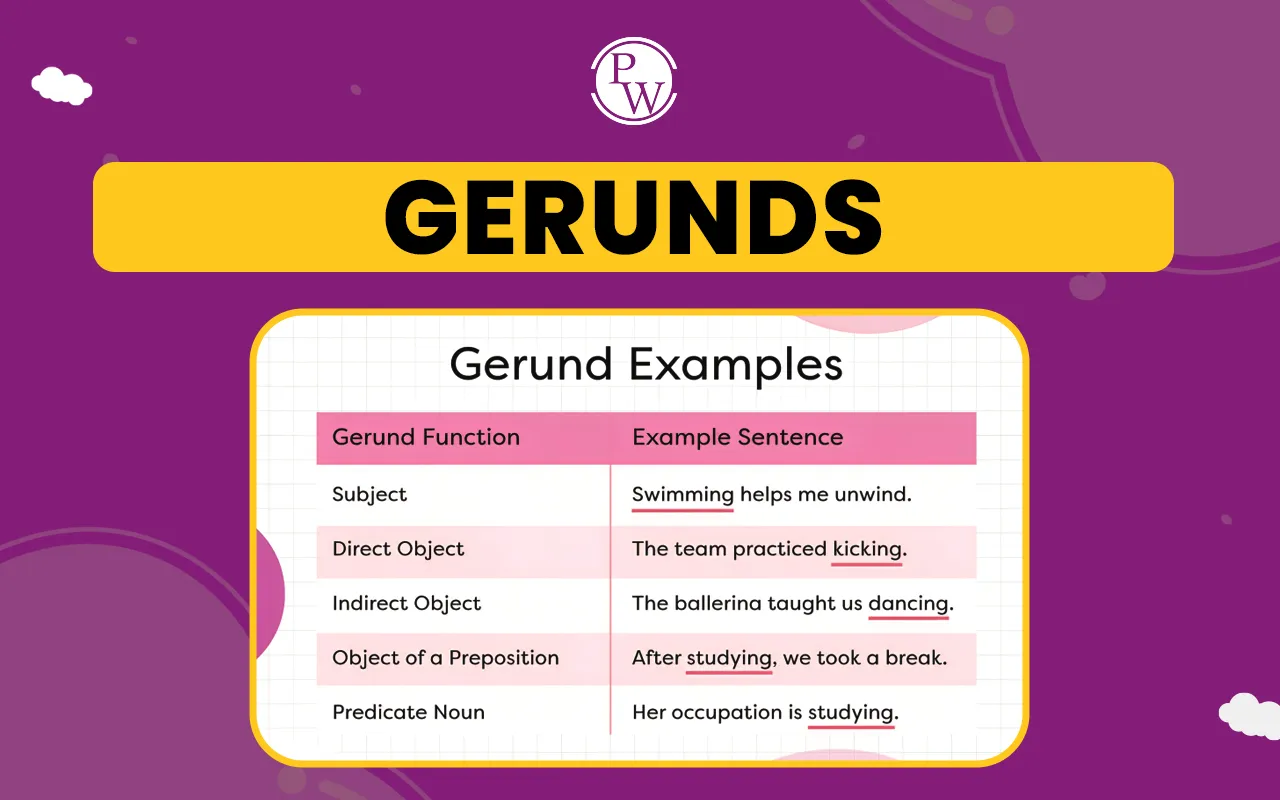
Gerunds: Did you know that some words look like verbs but act like nouns? These special words are called gerunds ! A gerund ends in -ing and is a clever way to talk about activities as if they are things.
This helps make your sentences more engaging and interesting. Understanding how to use gerunds can improve your writing and speaking by allowing you to describe activities in a fun and detailed way.
What Is a Gerund? – Definition and Meaning
A gerund is a verb form that ends in -ing and functions as a noun in a sentence. Though gerunds are derived from verbs, they do not act as verbs in a sentence but instead, serve as objects, subjects, or complements, just like regular nouns. Essentially, a gerund is a noun that originates from a verb.
Key Characteristics of a Gerund:
- It always ends in -ing .
- It is formed by adding -ing to the base verb.
- It acts as a noun in a sentence.
For example:
- Reading is my favorite hobby. (Here, "reading" is a gerund, acting as the subject of the sentence.)
- I enjoy swimming in the pool. (Here, "swimming" is a gerund, acting as the object of the verb "enjoy.")
Forming a Gerund – Rules to Follow
Why Are Gerunds Important?
Gerunds are important because they let us talk about activities or actions as if they are things. This helps make sentences more detailed and fun! Using gerunds can also make your writing sound smoother. Examples :
- Without a gerund: I like to read books.
- With a gerund: I like reading books.
See how the second sentence sounds more natural? That’s why gerunds are great!
Quick Tip for Remembering Gerunds
If you see a word ending in -ing and it’s acting as a thing or activity in the sentence, it’s probably a gerund. Here’s an easy way to check: try replacing the -ing word with a noun like “activity” or “thing.” If the sentence still makes sense, then you know it’s a gerund.
Example 1:
- Sentence: She enjoys painting .
- Check: Replace “painting” with “the thing.”
- Result : She enjoys the thing.
This also makes sense, showing that “painting” is a gerund acting as the object of the verb “enjoys.”
Example 2:
- Sentence: We talked about going on vacation.
- Check: Replace “going” with “the activity.”
- Result: We talked about the activity on vacation.
This replacement still makes sense, so “going” is a gerund acting as the object of the preposition “about.”
Example 3:
- Sentence: Dancing makes her happy.
- Check: Replace “dancing” with “the activity.”
- Result: The activity makes her happy.
Since the sentence still makes sense, “dancing” is a gerund acting as the subject.
Practice Time!
Now it’s your turn to practice using gerunds. Fill in the blanks with the correct gerund form of the verb in parentheses.
- My sister enjoys ___ (paint) pictures of animals.
- ___ (Swim) in the pool is my favorite summer activity.
- They talked about ___ (travel) to new countries.
- We are thinking about ___ (start) a new club.
- ___ (Dance) at the party was so much fun!
Answers :
- painting
- Swimming
- traveling
- starting
- Dancing
Gerunds make sentences more fun and detailed by turning actions into things you can talk about. Whether you’re using them as the subject, the object, or after a preposition, gerunds help your sentences sound smooth and connected. Keep practicing, and you’ll soon be a gerund expert!
| Related Articles | |
| Proverb | Unseen Passage |
| Preposition | Article Writing |
| Pronoun | Alphabet |
FAQs
Are gerunds the same as present participles?
Can gerunds follow prepositions?
Can gerunds be plural?
Can a gerund be used as the object of a preposition?